Cutebee vs. Rolife: Which Miniature House Brand is Better? (2025 Comparison)
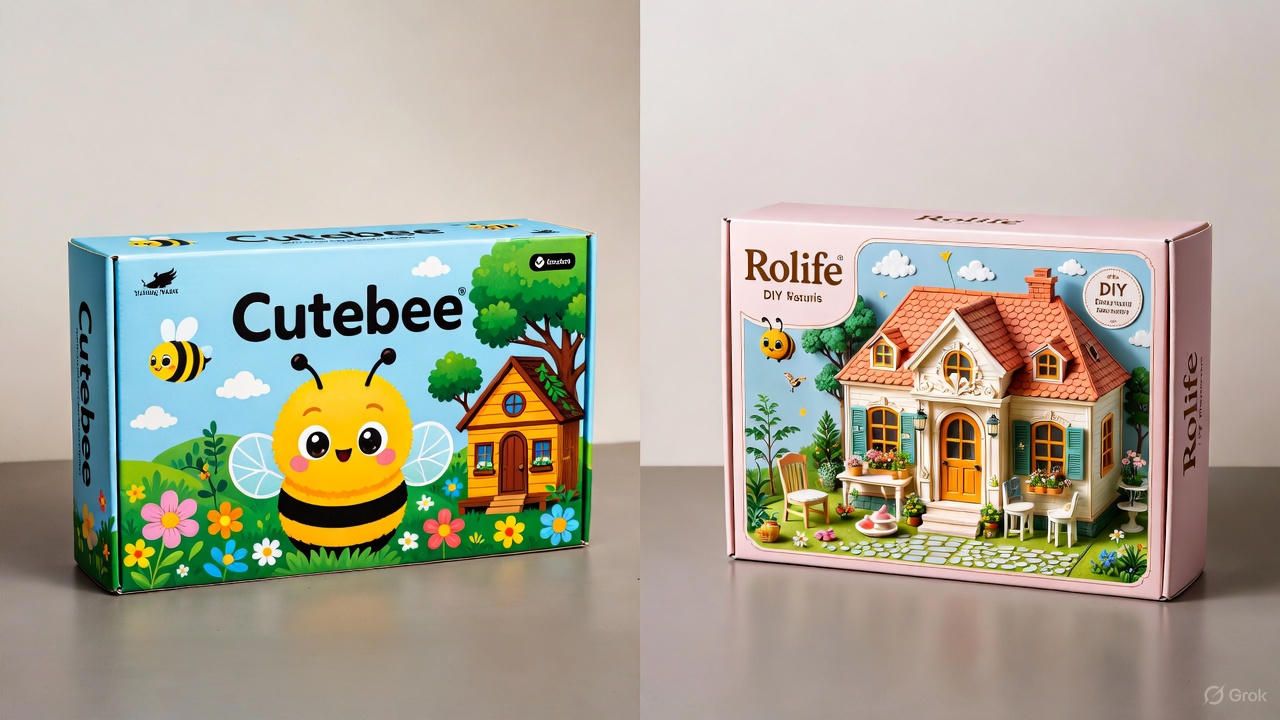
As a veteran miniature builder with over 15 years in the hobby—I've assembled more than 150 DIY kits, from basic book nooks to full-scale dollhouses—I'm often asked to pit brands against each other.
Cutebee and Rolife (a sub-brand of Robotime) dominate the affordable miniature house market.
In this hands-on showdown, I'll draw from my builds of five Cutebee kits (like the Owl Bookstore and Champs-Élysées Florist) and eight Rolife ones (including Sunshine Town and Cathy's Flower House).
I'll zero in on wood quality, instruction clarity, and price.
Wood Quality: Precision Cuts vs. Budget Build.
Wood is the backbone of these kits—3mm birch plywood (MDF) is standard, but execution varies wildly.
Rolife's Edge
Their laser-cut sheets are surgical: edges are scorch-free, tabs slot without forcing, and pre-colored veneers (warm browns, teals) hold up to glue without warping.
In my Sunshine Town build, zero pieces splintered. Experts emphasize their "premium birch," and it shows—no sanding needed beyond a quick emery board swipe.
Cutebee's Trade-Off
Solid for the price—pre-dyed wood avoids bare spots—but it's often 2.5-3mm and prone to minor burns or flex.
The Owl Bookstore's shelves bowed slightly under accessory weight until I reinforced with glue. It's forgiving for casual builders, but pros will spot the shortcuts.
Winner: Rolife for durability; Cutebee if you're okay with occasional tweaks.
Instruction Clarity: Photo Guides vs. Puzzle-Solver Vibes.
Clear manuals separate "fun weekend project" from "frustrated rage-quit."
Rolife's Strength
Full-color booklets with exploded diagrams, numbered bags matching steps, and English that's actually readable.
My Cathy's Flower House guide had QR codes linking to 4K assembly videos—a game-changer for tricky wiring. Most user reviews rank Rolife #1 for accessibility.
Cutebee's Hurdles
Photo-heavy but sparse—steps jump without warnings, and parts aren't always labeled.
The Le Chocolatier kit had me backtracking twice for vague "attach panel A" calls. Users often complain of "guesswork" in feedback.
That said, their dust covers and music boxes add charm that manuals don't cover.
Winner: Rolife, hands-down—especially for solo beginners.
Price: Bang-for-Buck Breakdown.
Both hover in the $30-60 sweet spot for 1:24 kits, but extras tip the scales.
- Rolife Pricing: $40-55 average. You pay for polish—no glue included, but the fit reduces waste. Value shines in longevity.
- Cutebee Pricing: $32-45. Often bundled with dust covers and tunes. Industry guides call them "high quality on par with Rolife" at a discount, ideal for bulk buyers.
Head-to-Head Comparison Table.
Title:Rolife vs. Cutebee At-A-Glance.
| Feature | Rolife (Robotime) | Cutebee | The Winner |
| Price | $$ ($40-$55) | $ ($30-$45) | Cutebee |
| Wood Quality | Premium Laser Cut | Standard Plywood | Rolife |
| Instructions | Clear English & Video | Photo-heavy, vague | Rolife |
| Extras | Sold Separately | Dust Cover Included | Cutebee |
| Best For | Beginners & Gifts | Budget Builders | Depends |
The Verdict: Rolife Takes the Crown (But Cutebee's a Steal)
After dissecting dozens of kits, Rolife is the better brand overall—its superior wood and crystal-clear instructions make for frustration-free builds that last.
If you're investing in the hobby long-term, start here; their 2025 lineup (like the new Henry's Chocolate) feels like heirlooms. Cutebee? Grab it if price trumps polish—you'll get 80% of the joy for 75% of the cost.
Pro Tip: Whichever you pick, snag Titebond II Glue and Precision Tweezers upfront.
For a deeper look at why we love this brand, check out our in-depth Rolife Sunshine Town Review. Happy building—your shelf's about to get magical.
Read Also: 5 Best Beginner Book Nook Kits.
Join the Club
Get weekly miniature tips and kit discounts.