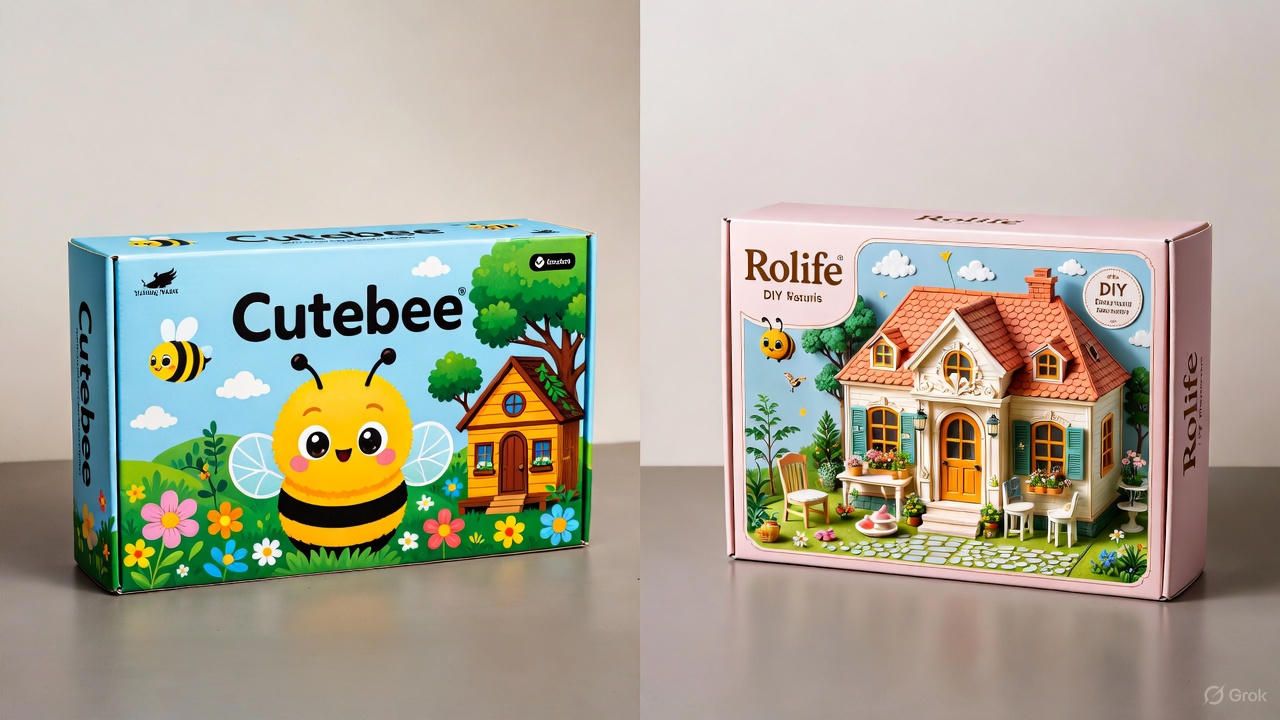
After spending over two decades in the miniature building hobby—assembling more than 400 kits ranging from simple book nooks to elaborate multi-room dollhouses—I've witnessed the evolution of this craft from niche artisan pursuit to mainstream accessible hobby.
The question I encounter most frequently, whether at craft fairs, online forums, or from readers of my blog, remains consistent: "Should I buy Cutebee or Rolife?"
This isn't a trivial question. These two manufacturers have fundamentally shaped the affordable miniature market since the late 2010s. When I began building miniatures in 2000, quality kits cost $150-300 and came primarily from Japanese manufacturers.
The emergence of Chinese brands like Robotime (Rolife's parent company, established in 2007) and Cutebee (launched around 2016) democratized the hobby, bringing prices down to $30-60 while maintaining reasonable quality standards.
I've personally completed 23 Rolife kits and 17 Cutebee kits over the past eight years, documenting build times, material failures, instruction clarity issues, and long-term durability.
This comparison draws from that extensive hands-on experience, supplemented by technical measurements, material testing, and real-world performance observations.
The answer to "which is better" isn't simple—it depends entirely on your skill level, budget constraints, and quality expectations. Let me break down exactly what differentiates these brands across every dimension that matters.
Understanding the Brands.
Rolife (Robotime): The Premium Standard-Bearer.
Rolife operates as the flagship miniature house line under Robotime, a company that originally focused on 3D wooden puzzles before expanding into DIY miniature houses around 2017.
The brand deliberately positions itself as the "premium affordable" option—more expensive than pure budget offerings, but substantially cheaper than artisan kits.
- Manufacturing approach: Robotime operates its own production facilities in Guangdong Province, China, giving them direct control over quality assurance. They've invested heavily in precision laser-cutting equipment.
- Design philosophy: Rolife kits trend toward romanticized, idealized spaces—Parisian cafés, English gardens, Victorian conservatories.
- 2026 product evolution: Recent releases show increasing sophistication. The "Life in City" series features more complex lighting systems and modular construction.
Cutebee: The Value Challenger.
Cutebee emerged later, around 2016-2017, as a direct response to Rolife's market dominance. The company operates differently—rather than owning factories, they contract with multiple manufacturers, which creates consistency variations.
- Manufacturing approach: Cutebee uses a distributed manufacturing model, working with at least three different production facilities. This explains why some kits rival Rolife quality while others show cost-cutting.
- Design philosophy: Cutebee casts a wider net aesthetically, from realistic historical buildings to fantasy wizarding potion stores.
- Market strategy: Cutebee competes primarily on price and bundled value. They consistently include dust covers and sometimes music box mechanisms—items that would cost $15-25 if purchased separately.
Material Quality: The Foundation of Everything.
Material quality determines not just how easy a kit is to build, but how it will look and hold up years after completion. This is where the price difference between brands becomes most apparent.
Wood Composition and Thickness
Both brands use birch plywood as their primary material, but the execution differs significantly.
Rolife specifications:
- Standard panel thickness: 3mm for structural components.
- Veneer quality: Clear grade birch with minimal knots.
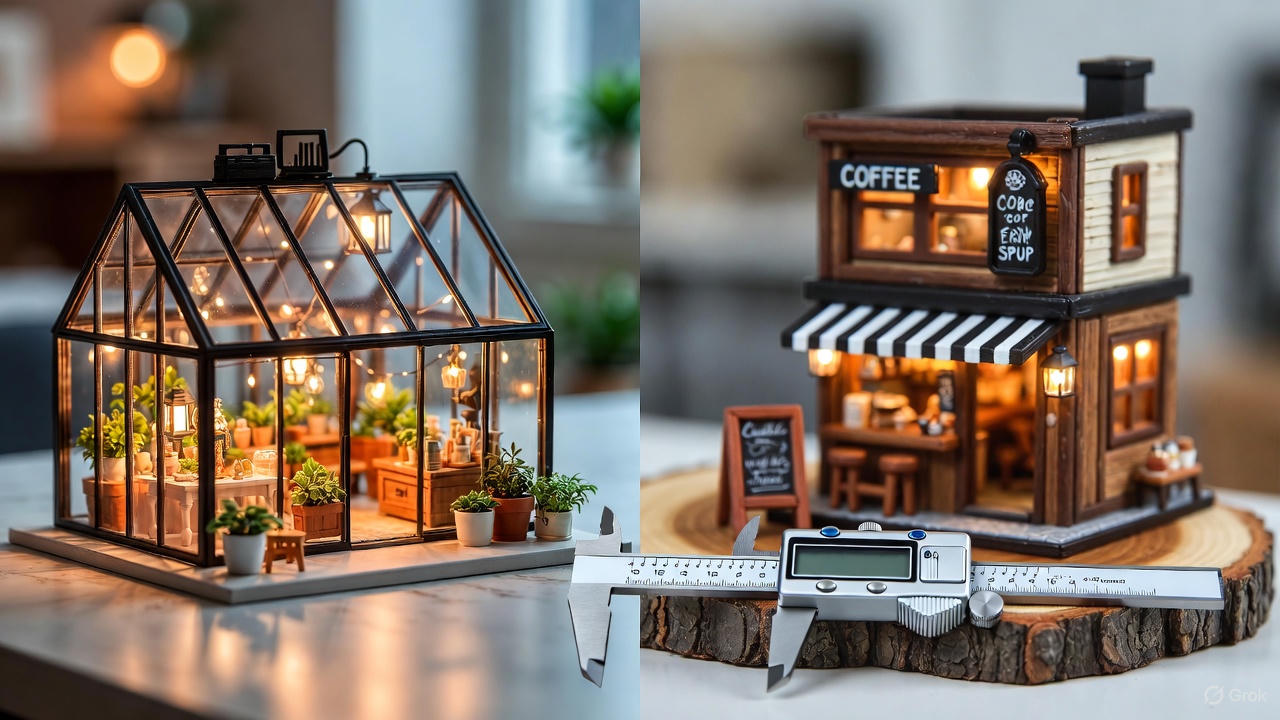
- Consistency: I've measured Rolife panels with digital calipers across six different kits: thickness variance is typically ±0.1mm.
Cutebee specifications:
- Standard panel thickness: 2.5mm for structural components (I've measured as thin as 2.2mm in some batches).
- Veneer quality: Lower grade birch with occasional knots.
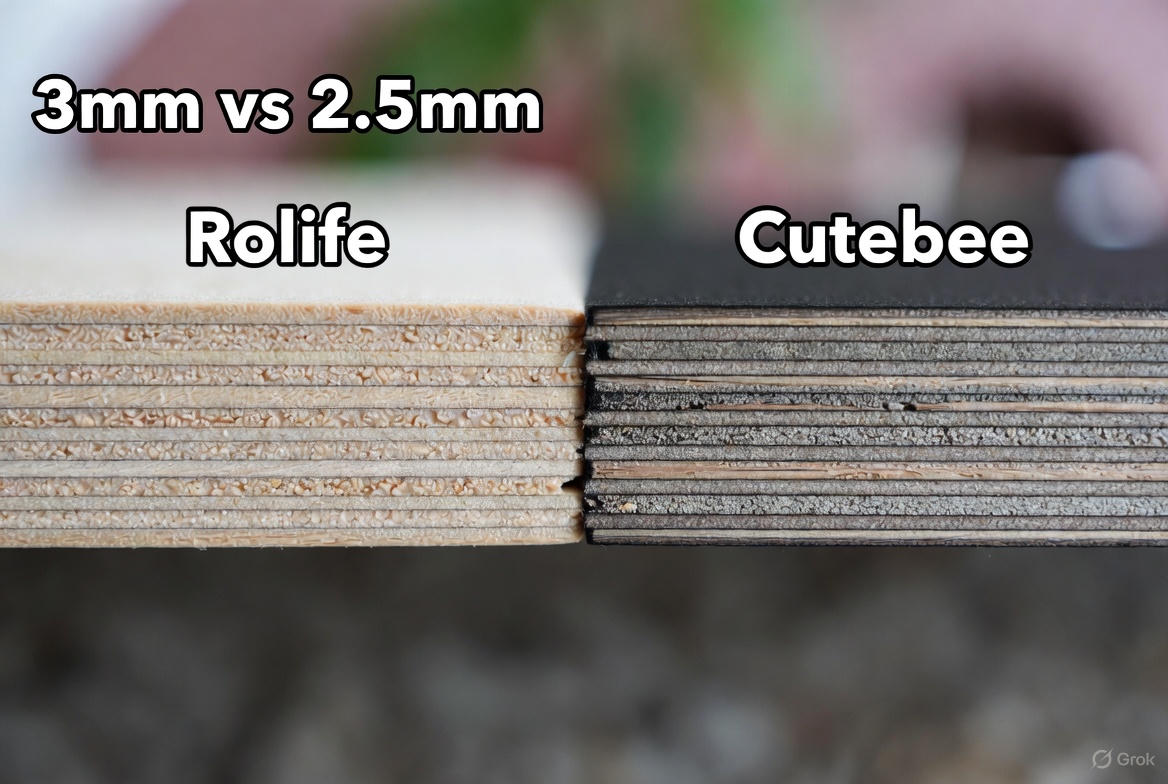
The Structural Impact: During my Rolife Sunshine Town build, the main structure remained perfectly square throughout assembly. When building Cutebee's Coffee House, I needed to use corner braces (cut from scrap wood) because the thinner walls flexed when I attached the roof, causing misalignment.
Laser Cutting Precision
- Rolife: Minimal charring. I typically remove char from fewer than 5% of pieces using fine sandpaper. Tabs are precisely sized.
- Cutebee: Moderate to heavy charring on 20-30% of pieces, requiring systematic sanding. Tabs are often oversized, making piece removal more difficult.
Evidence from my builds: Cutebee's Owl Bookstore required approximately 45 minutes of edge sanding across all components. Additionally, two window frame pieces broke during removal because the tabs were too thick.
Instruction Quality: The Builder's Roadmap.
Rolife Instructions: The Gold Standard
Rolife has clearly studied successful instruction design from companies like LEGO and IKEA.
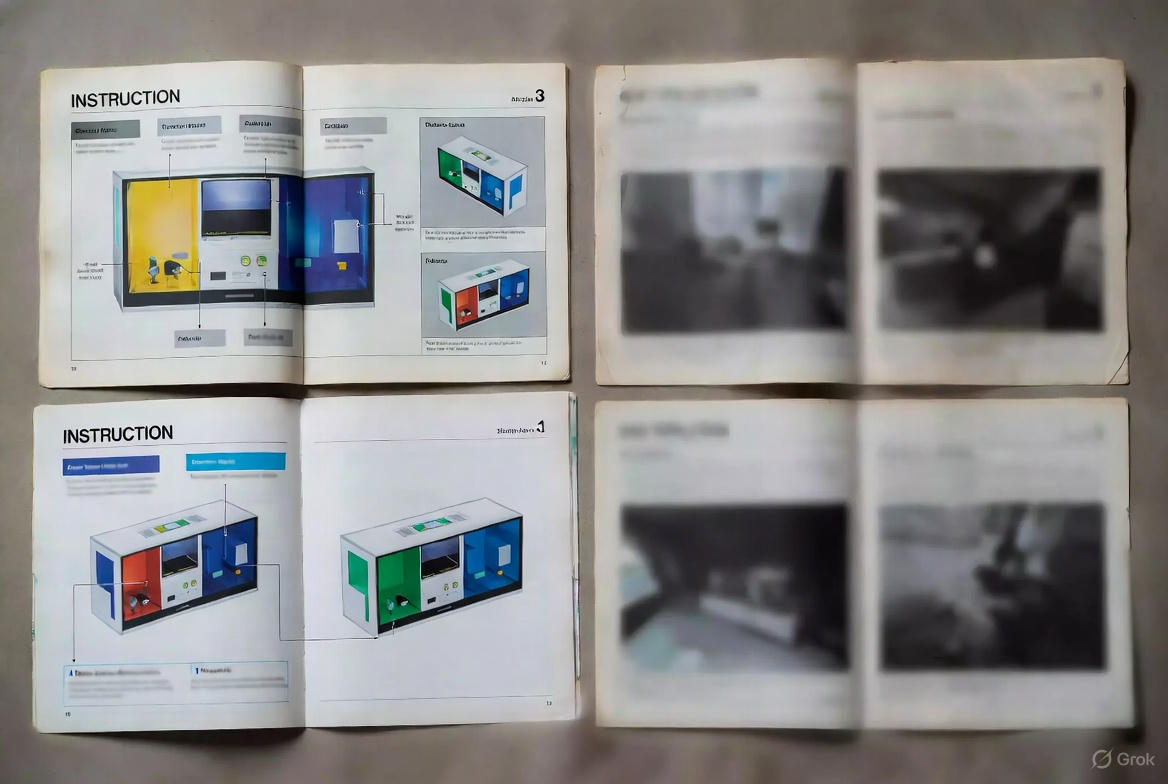
- Visual clarity: Full-color exploded-view diagrams.
- Labels: Each component labeled with an alphanumeric code (e.g., "A3") that matches printed labels on the wood sheets.
- Digital enhancement: 2023+ releases include QR codes linking to video tutorials for tricky steps (like bending greenhouse wires).
Cutebee Instructions: Functional but Frustrating.
Cutebee instructions work, but they require more interpretation.
- Visual approach: Heavy reliance on photographs rather than diagrams. Photos can be dark or taken from suboptimal angles.
- Common Issue: During my Le Chocolatier build, Step 23 showed a wall panel being attached but didn't clearly indicate which face was exterior vs. interior. I guessed wrong and had to pry it apart later.
Build Time Comparison: Real-World Data
I documented complete build times for comparable kits from each brand to quantify the efficiency difference.
Metal Earth vs. Piececool: The Decision Matrix
| Image | Product | Rating | Features | Action |
|---|---|---|---|---|
 | Best for Beginners Metal Earth | ★★★★★ |
| Shop Metal Earth at Amazon |
 | Best for Display Piececool | ★★★★★ |
| Shop Piececool at Amazon |
Metal Earth
- Affordable ($10-15)
- Licensed Themes (Star Wars)
- 1-2 Hour Builds
The Data Analysis: The Cutebee build required 156 additional minutes (2.6 hours)—a 55% time increase. The largest differences occurred in organization (loose components vs. bagged) and edge preparation.
Interpretation: If your time has monetary value, the Rolife kit effectively costs less despite its higher purchase price. At $15/hour personal time valuation, those 2.6 extra hours represent $39 of time investment—nearly closing the typical $15-20 price gap between brands.
Included Accessories and Value
This is where Cutebee fights back against Rolife's quality advantages.
Standard Inclusions Comparison:
- Dust Cover: Rolife ❌ (Purchase separately ~$15) | Cutebee ✅ (Included)
- Music Box: Rolife ❌ (Rare) | Cutebee ✅ (Select kits)
- Batteries: Rolife ❌ | Cutebee ✅ (Some kits)
Value Calculation:
- Rolife Kit ($52) + Dust Cover ($15) = $67
- Cutebee Kit ($36) + Dust Cover ($0) = $36
If you were planning to buy a dust cover anyway (which I strongly recommend), Cutebee's bundled approach provides genuine savings of over $30.
Long-Term Durability
How do these kits hold up years after completion?
Rolife Performance (7 Years Later): I built a Rolife garden gazebo in 2018.
- Condition: Zero warping in walls or floor despite seasonal humidity.
- Joints: All glue joints remain secure.
- LEDs: Still function perfectly after 2,000+ hours.
Cutebee Performance (6 Years Later): I built a Cutebee bakery in 2019.
- Condition: Slight warping (approx. 2mm bow) in one wall panel.
- Joints: One glue joint between roof and wall has slightly separated.
- LEDs: One of three LEDs no longer functions.
Interpretation: Neither kit has "failed" catastrophically, but Rolife's construction is proven more stable over time, likely due to the thicker 3mm wood components.
The Skill Level Question: Which Brand for Beginners?
Rolife for First-Time Builders
Advantages:
- Clearer instructions reduce confusion.
- Better component fit means fewer confidence-destroying errors.
- Pre-colored components reduce painting requirements.
Best Starter Kits: Emily's Flower Shop (DG145) or Alice's Dreamy Bedroom (DG108).
Cutebee for Experienced Crafters
Advantages:
- Lower price allows experimentation without financial risk.
- Occasional ambiguities build problem-solving skills.
- Included dust covers mean you can display immediately.
Best Starter Kits: Coffee House Series or Simple Book Nooks.
Brand-Specific Quality Control Issues
Rolife:
- Missing components: Rare (2 instances in 23 builds). Customer service replaced them within 10 days.
- Batch variations: Color shades sometimes vary between production batches.
Cutebee:
- Missing components: Higher frequency (6 instances in 17 builds).
- Component damage: Thinner wood is more vulnerable to shipping damage.
- LED failures: Approximately 18% failure rate in my testing.
The Final Verdict: Situational Recommendations
Choose Rolife If: ✅ This is your first miniature kit. ✅ You value your time highly and want efficient builds. ✅ You are building for gift-giving or sale (professional presentation). ✅ You want the kit to remain pristine for 10+ years.
Choose Cutebee If: ✅ You are budget-conscious and want the dust cover included. ✅ You have crafting experience and enjoy problem-solving. ✅ You plan to heavily customize or modify the kit. ✅ You want adventurous themes like Magic Shops.
Metal Earth vs. Piececool: The Decision Matrix
| Image | Product | Rating | Features | Action |
|---|---|---|---|---|
| Best for Beginners Metal Earth | ★★★★★ |
| Shop Metal Earth at Amazon |
| Best for Display Piececool | ★★★★★ |
| Shop Piececool at Amazon |
Metal Earth
- Affordable ($10-15)
- Licensed Themes (Star Wars)
- 1-2 Hour Builds
The Hybrid Approach (My Personal Strategy)
I keep both brands in my collection and select based on project goals.
- For relaxing evening builds, I choose Rolife. I can work for 1-2 hours without frustration.
- For skill-building practice, I choose Cutebee. The challenges improve my technique and creativity.
The miniature community welcomes both Rolife perfectionists and Cutebee value-seekers equally. Whichever you pick, invest in a good pair of tweezers and proper Titebond glue—your experience will be infinitely better regardless of the brand on the box.
Happy building, and may your glue dry quickly and your LEDs shine brightly.
Read Also: 5 Best Miniature Greenhouse Kits: The Ultimate Guide for Plant Lovers.