
Transparency Note: This post contains affiliate links. If you make a purchase through these links, we may earn a small commission at no extra cost to you. This helps us buy more kits to review!
The gift dilemma arrived via text message from Grandma: "I saw the most adorable miniature dollhouse kit at the craft store—would Emma love it for her birthday?"
I pulled up the product listing. The photos looked perfect: a charming Victorian flower shop with tiny furniture, delicate windows, and warm LED lighting.
Then I saw the label: Ages 14+.
Emma is nine.
Grandma texted again: "The box says 14 and up, but that seems ridiculous. It's just a dollhouse! Is this one of those silly liability warnings, or is it actually dangerous?"
This is a conversation happening in thousands of families right now. Miniature building kits—wooden book nooks, DIY dollhouses, 3D puzzles—have exploded in popularity. They look absolutely enchanting in online photos. They're creative, screen-free, and produce something tangible and beautiful. Naturally, parents and grandparents want to share these kits with children.
But that "14+" rating creates hesitation. Is it genuinely dangerous? Overly cautious? A legal formality?
After building over seventy miniature kits with my own children (now ages 8, 11, and 14) and facilitating builds with dozens of other families, I can provide a comprehensive answer: The age rating is primarily about safety regulations regarding small parts and sharp tools.
However, with proper supervision and role division, many kits are appropriate for younger children. Let me break down exactly what the risks are, why the ratings exist, and which kits are genuinely suitable for younger builders.
Why Does Every Box Say "Ages 14+"? Unpacking the Legal Reality.
The "Ages 14+" designation isn't random. It stems from two distinct regulatory frameworks.
Reason 1: CPSC Small Parts Regulations (The Choking Hazard Law)
In the United States, the Consumer Product Safety Commission (CPSC) enforces strict regulations. Any toy intended for children under 3 years old that contains small parts capable of fitting through a testing cylinder (roughly the size of a toddler's throat) must carry a choking hazard warning.
Miniature kits are absolutely packed with components that fail this test:
- Tiny furniture pieces (chairs, tables often measuring 15mm).
- Miniature books, plants, and beads (sometimes as small as 5mm).
- Hardware components (screws, hinges, LED bulbs).
The Manufacturer's Solution: Rather than restricting sales to ages 3+ (which requires expensive testing), most manufacturers simply rate the entire product line as "Adult Collectible" (14+). This legally bypasses the strict toy regulations.
Reason 2: Tool and Chemical Requirements (The Actual Danger)
Beyond laws, these kits genuinely require tools and materials that present real risks:
- Sharp Cutting Tools: Removing wooden components from laser-cut sheets cleanly requires precision craft knives (X-Acto). These razor-sharp blades can cause serious lacerations.
- Chemical Adhesives: Wood glues are generally safe, but some specialty adhesives (for acrylic "glass" or metal) contain solvents that produce fumes.
- Button Batteries: Many kits use CR2032 button batteries. If swallowed, these can cause severe internal burns within hours.
The Honest Assessment: The "14+" rating isn't arbitrary. These kits involve hazards that younger children cannot safely manage independently.
The Real Hazards: What Can Actually Go Wrong.
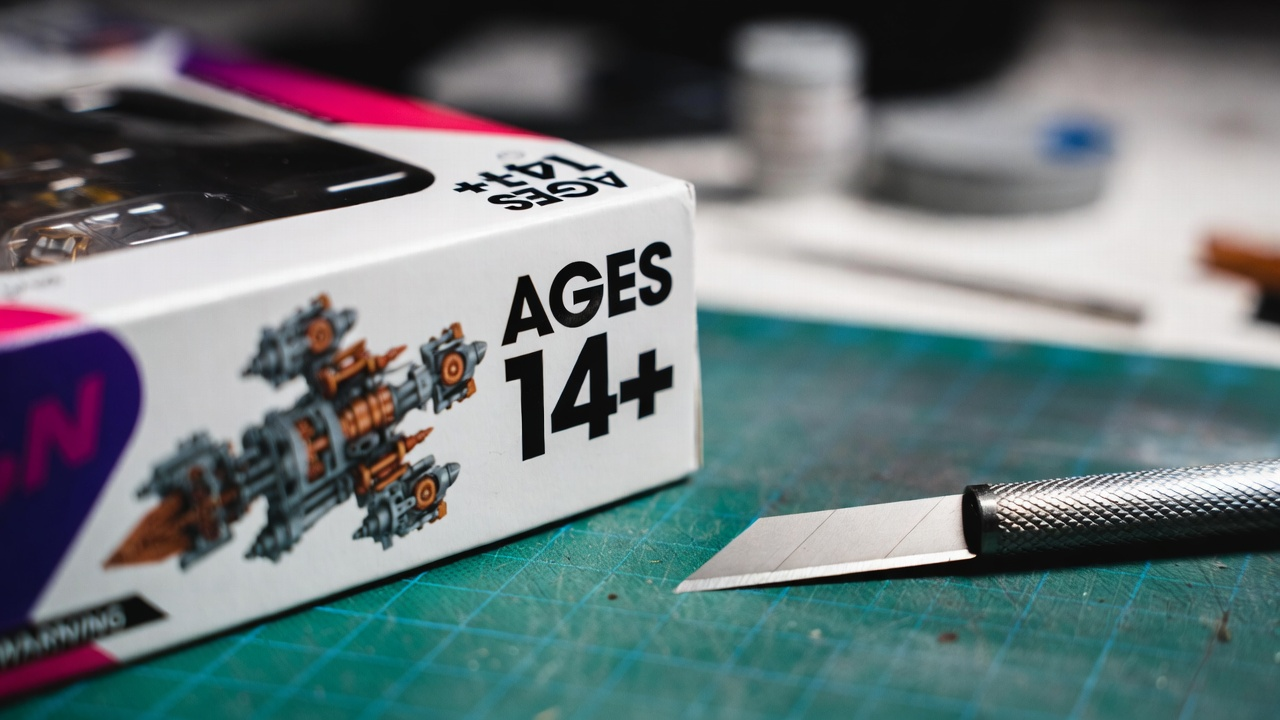
As a parent and experienced builder, I approach risk assessment honestly rather than dismissively. Here are the genuine dangers I've observed:
Hazard 1: Lacerations from Craft Knives
Twisting pieces free from the sheets causes splintering. You must use a knife to score the tabs.
- The Risk: Deep finger cuts when a hand slips while applying pressure.
- Mitigation: Adults exclusively handle all cutting. Establish a "Cutting Zone" where children do not have access to blades.
Hazard 2: Chemical Exposure
Super glue (Cyanoacrylate) bonds skin instantly. Solvent-based glues can cause headaches in poor ventilation.
- Mitigation: Use child-safe adhesives like Aleene's Tacky Glue or Elmer's Wood Glue for the child's tasks. Reserve specialty adhesives for the adult.
Hazard 3: Button Battery Ingestion
LED lighting systems typically use coin-sized, shiny batteries that are appealing to young children.
- Mitigation: Adult-only battery installation. Secure the compartment with tape.
Hazard 4: Frustration and Fatigue
Complex kits taking 15 hours create mental fatigue. Tired, frustrated children make poor decisions—rushing cuts, forcing components, or abandoning safety protocols.
- Mitigation: Limit sessions to 45–60 minutes.
The Safe Co-Building Strategy: Task Division.
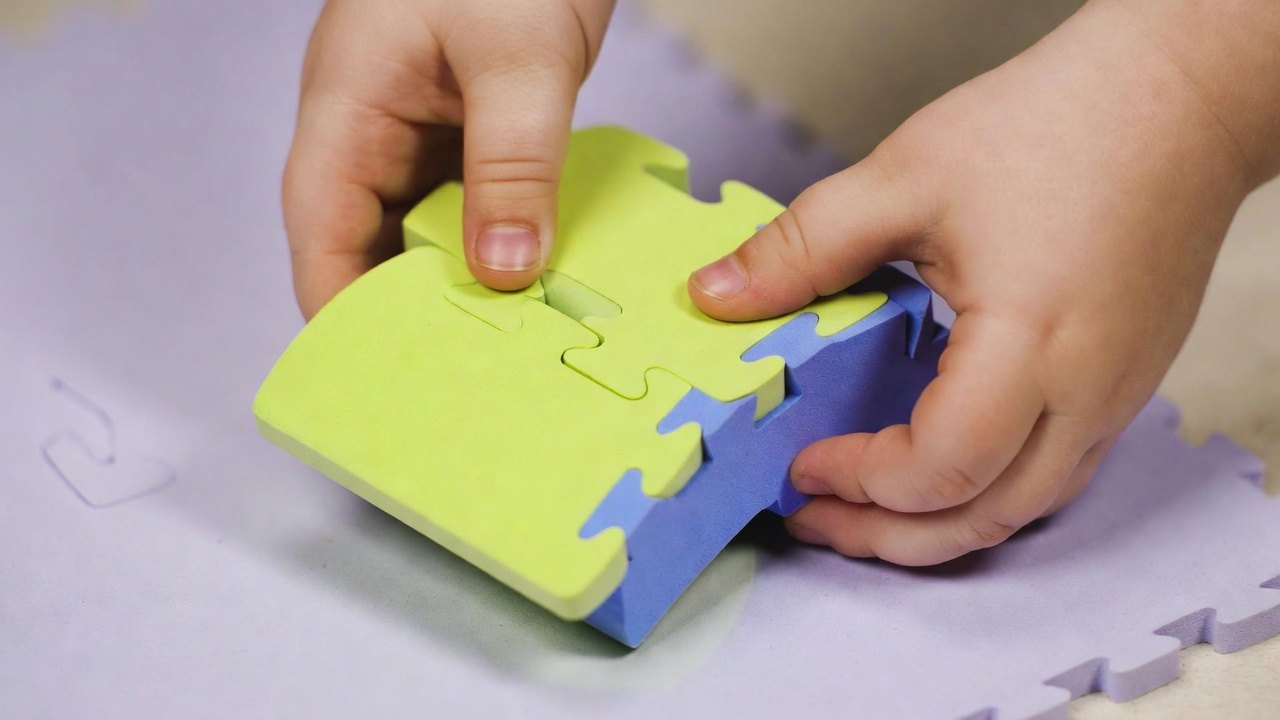
The key insight that transformed miniature building from "too dangerous" to "wonderful bonding" was recognizing that not all tasks require the same skill level.
The Adult Zone (High-Risk Tasks)
What adults handle exclusively:
- Cutting: All removal of components from wooden sheets using blades.
- Adhesives: Super glue or solvent-based glue application.
- Electronics: Battery installation and wire stripping.
- Structure: Final alignment of walls to ensure they are square.
The Child Zone (Age-Appropriate Tasks)
- Sorting: Identifying components by number.
- Sanding: Smoothing rough edges with an emery board.
- Gluing: Applying white/tacky glue to furniture.
- Decoration: Placing stickers, arranging books, and "staging" the scene.
Age-Appropriate Kit Recommendations.
Not all kits are created equal. Here is what to buy based on age.
Ages 6-8: Foundations (No Cutting)
- Recommended: LEGO Creator or CubicFun 3D Foam Puzzles.
- Why: Perfect tolerances, satisfying snap-fit, zero cutting required. Safe and lightweight.
- Avoid: Traditional wooden miniature kits (frustration risk is too high).
Ages 8-10: Introducing Real Miniatures
- Recommended: Rolife "Plastic Super Store" Series.
- Why: These use plastic components that snap together, eliminating the need for knives.
- Recommended: Cutebee "Garden House" (Simplified Wood).
- Condition: Adult MUST handle all cutting. Child assembles furniture.
Ages 10-12: The Transition
- Recommended: Rolife "Garden House" (Jar Series).
- Why: Fewer pieces, protected inside a plastic jar.
- Recommended: Robotime ROKR Mechanical Models.
- Why: Gears teach engineering principles. Functional movement keeps them engaged.
Ages 12-14: Approaching Independence
- Recommended: Standard Book Nook Kits.
- Why: By this age, most builders have the patience for 10-hour builds. Graduated craft knife use is possible under direct supervision.
The Readiness Checklist: Is Your Child Ready?
Age is just a number. Before buying, assess your child against these three critical factors.
1. Patience and Frustration Tolerance
- Assessment: Can your child work on a single task for 30-45 minutes without losing focus?
- Red Flag: Frequent rage-quitting or destroying projects when frustrated.
- Green Flag: Willingness to retry failed attempts or ask for help rather than forcing solutions.
2. Fine Motor Skills
- Assessment: Can they tie shoes independently or thread tiny beads?
- Red Flag: Difficulty with zippers or unsteady grip.
- Green Flag: Successfully builds complex LEGO sets independently.
3. Instruction Following
- Assessment: Do they understand that Step 1 must happen before Step 2?
- Red Flag: Consistently skips steps or guesses.
- Green Flag: Checks diagrams before proceeding and asks clarifying questions.
Scoring: If your child demonstrates primarily green flags, they are likely ready for co-building.
Establishing the Safe Building Environment.
Beyond selecting the kit, you need to set up the room correctly.
The Physical Setup
- Lighting: You need a bright task lamp. Dim light leads to accidents.
- Tool Security: Keep the X-Acto knife in a drawer or high shelf when not actively in your hand. Never leave it on the table during a break.
- First Aid: Have a Band-Aid ready. It sounds paranoid until you need it.
The Procedural Protocols
- "No Tools When Standing": All cutting and assembly happens while seated.
- "One Tool at a Time": Finish with the glue before picking up the sander.
- "Slow is Smooth": Rushing creates mistakes. If the child gets antsy, end the session.
Why This Matters: Miniature Building vs. Screen Time.
The safety concerns are real, and I've presented them honestly. But consider the alternative.
The "safe" alternative many parents default to is handing their child a tablet.
- Screen Time Risks: Sleep disruption, attention span reduction, dopamine loops.
- Miniature Building Benefits: Fine motor development, spatial reasoning, delayed gratification, and Parent-Child Bonding.
Yes, injuries can occur if safety protocols are ignored. But the developmental benefits of building something tangible—something real—vastly outweigh the alternative of passive consumption.
Conclusion: The Gift Grandma Should Buy
So what do I tell Grandma when she asks if the dollhouse kit is appropriate for nine-year-old Emma?
"Yes, buy the kit. But include a note that we will build it together."
I will handle the cutting and the batteries. Emma will sort the pieces and glue the tiny flowers. She will learn patience, precision, and engineering.
It is exponentially better than another piece of plastic junk or more screen time. The "Ages 14+" label is there for legitimate legal reasons, but with a committed parent, a miniature kit is the best gift you can give.
Choose the right kit. Divide the tasks. And prepare for the magic moment when your child flips the switch and sees the world you built together.
That moment is worth every precaution.