(Transparency Note: This post contains affiliate links. If you make a purchase through these links, we may earn a small commission at no extra cost to you.) This helps us buy more kits to review!)
Your bookshelf looks like a Muggle lives there. Let's fix that.
Listen, I get it. You've been a fan since you were eleven (or wished you were eleven when your letter never arrived). You've watched a certain Boy Who Lived defeat He-Who-Must-Not-Be-Named approximately 47 times.
You own the wands, the scarves, and the unnecessarily expensive merchandise from the theme parks.
But your bookshelf? It is still tragically ordinary.
Official, licensed book nooks depicting a certain famous "Magic Market" or "Diagon" shopping district would run you $200-400—if you could even find them.
Most are handmade by artists on Etsy, which justifies the price, but puts them out of reach for the average fan.
Meanwhile, clever kit manufacturers like Cutebee, Rolife, and Tonecheer have noticed this gap in the market. They thought, "You know what? We can make cobblestone alley scenes with potion shops and mysterious storefronts. We just won't... name them anything specific."
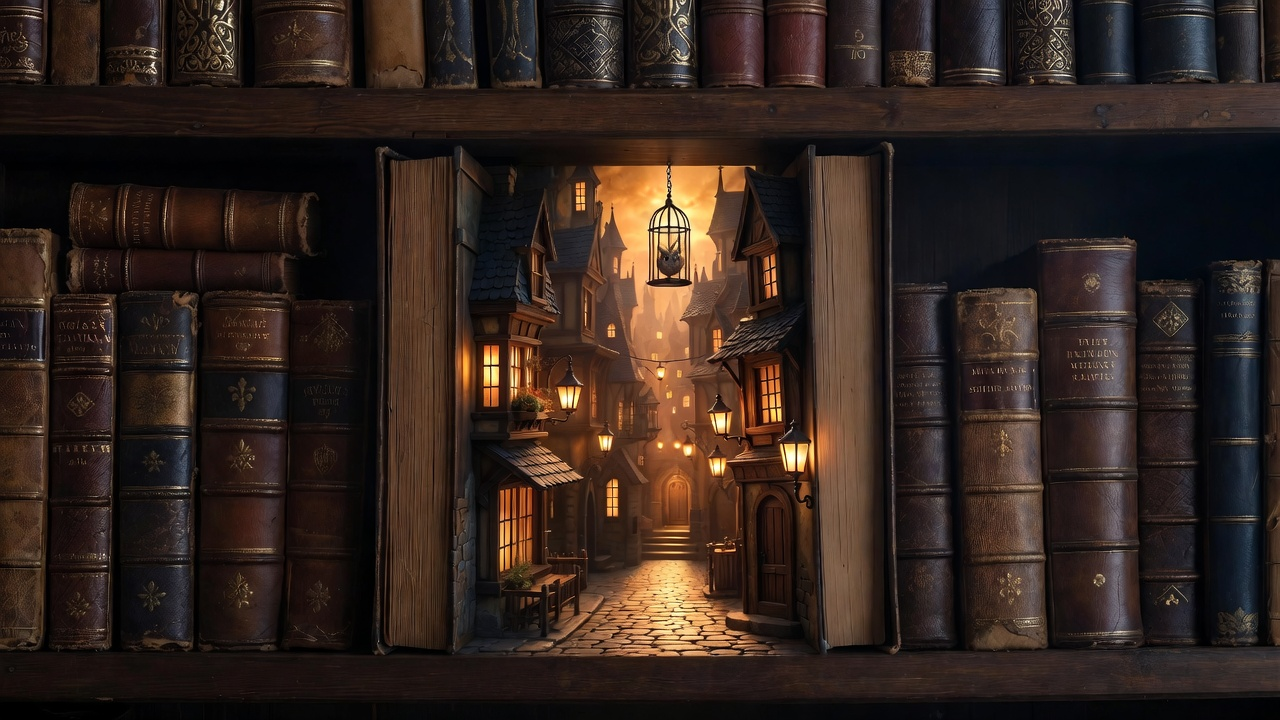
The result? Gorgeous DIY miniature kits that capture the exact aesthetic of gas-lamp-lit wizarding shopping districts. They feature crooked buildings, apothecary bottles, mystical signage, and owls. Lots of owls. They are "legally distinct," they cost $30-50, and they slot perfectly between your hardcover collection.
I've built all of them. Every single one. My bookshelf looks like I could turn down it and buy a wand. Here are the five kits that nail the vibe so hard, you'll swear they're official.
The "Secret" Tech: How They Make the Alley Look Infinite
Before we dive into the specific kits, you need to understand the magic trick they all use.
If you look at photos of these book nooks, the alleyway looks like it goes on forever—much deeper than your bookshelf. How?
The Angled Mirror.
All the kits below (except the "Book Style" ones) use a mirror placed at a 45-degree angle at the very back of the alley. When you look in, the mirror reflects the "ceiling" of the box, which is painted to look like the rest of the street. It creates a perfect optical illusion of infinite depth.
Note: Keep your Windex handy. The #1 mistake builders make is leaving fingerprints on this mirror before sealing the box!
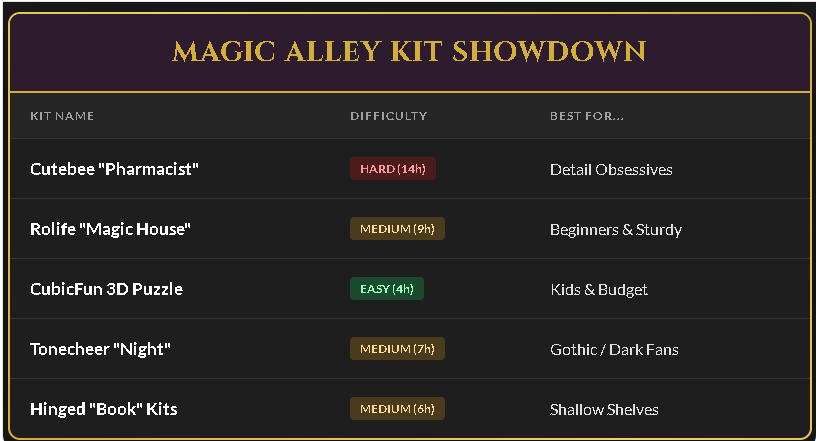
#1. The Masterpiece: Cutebee "Magic Pharmacist"
(A.K.A. The Potions Class Dream)
If a certain moody, black-robed potions professor opened an apothecary in a cobblestone alley, it would look exactly like this.
The Vibe:
This is, without a doubt, the most detailed magic shop kit on the market today. We're talking 200+ pieces of tiny potion bottles, dusty spell books stacked haphazardly, cauldrons bubbling (okay, they're not actually bubbling, but you can pretend), and shelves crammed with mysterious ingredients.
The color palette is deep emerald greens, rich burgundies, and aged wood tones. There is even a little staircase leading to a loft area packed with more bottles.
The Build Experience:
This is a Project (capital P). It took me about 14-15 hours spread over two weeks.
- The Hardest Part: The potion bottles. You have to cut tiny labels out of paper and glue them to dozens of tiny plastic beads and bottles. It is tedious, but the result is incredible.
- The Wiring: It uses a "Touch Switch" located on the front bottom corner. You don't need to reach behind the books to turn it on—you just tap the case.
Lighting:
It comes with pre-wired warm-white LEDs. The lights are positioned behind the translucent potion bottles, creating an amber backlit effect that screams "dangerous magical ingredients stored improperly."
- Pros: Absolutely stunning detail (40+ individual bottles), Smart Touch Switch, Comes with a dust cover (critical for long-term display).
- Cons: Expensive ($50-55), Very difficult build (not for kids), The wood can splinter if you aren't gentle.
The Verdict: If you are building only ONE magic alley book nook in your lifetime, make it this one. It's the kit that makes visitors say, "Wait, is that official merchandise?" No. It's $50 and 14 hours of my life, but YES it looks official.
#2. The Classic: Rolife "Magic House"
(A.K.A. The Owl Post Headquarters)
This is the kit for people who want the "Magic School" aesthetic without the 15-hour headache.
The Vibe:
Rolife's "Magic House" is the Platonic ideal of a charming wizarding bookshop. It features a prominent owl (because of course it does), stacks of leather-bound spell books, a vintage globe, a writing desk with quills, and stone walls that look like they've been standing since the Middle Ages.
The color scheme is warmer and lighter than Cutebee's—think cozy library or "Common Room" rather than a dark dungeon.
The Build Experience:
Rolife is famous for their "Mortise and Tenon" design. The pieces fit together with tabs and slots more securely than other brands, meaning you use less glue. It took me about 9 hours.
- The Best Part: The instruction manual. Rolife has the best English translations in the business. You won't be guessing what "Put Part A to the left of the side" means.
- Pros: Top-tier wood quality (no warping), Easier build than Cutebee, Adorable owl included, Very sturdy structure.
- Cons: Slightly less "depth" illusion than Cutebee, The LED switch is a standard flip-switch (usually hidden).
The Verdict: This is the kit for your first magic alley build. It's forgiving, it's gorgeous, and it won't make you want to throw it across the room at hour 11.
#3. The Budget Pick: CubicFun 3D Puzzle
(A.K.A. The Guilt-Free Gateway Drug)
Not everyone wants to commit $50 and a week of work to their first build. This is for you.
The Vibe:
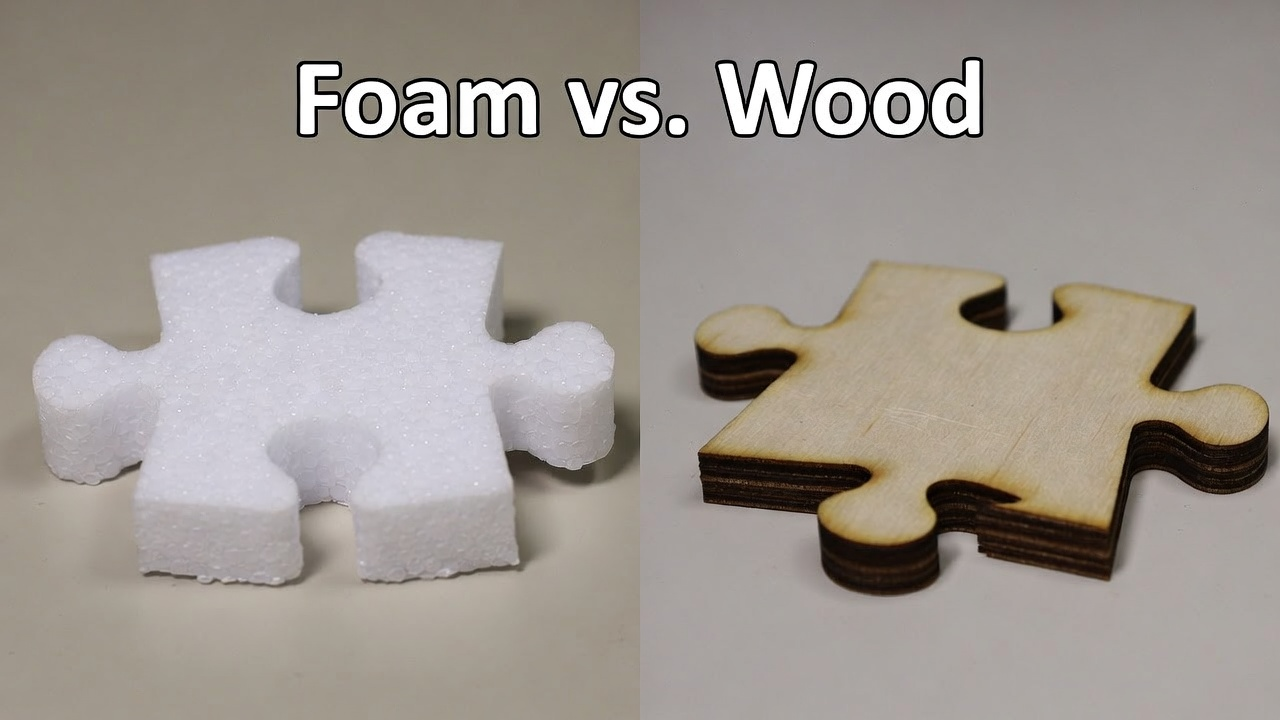
CubicFun makes foam board puzzle kits. They look like wood from a distance, but they are soft, printed foam sheets. They assemble like 3D jigsaw puzzles—no glue required. The design features the standard crooked buildings, shop signs, and mystical storefront aesthetic.
The Build Experience:
- Time: 3-5 hours.
- Difficulty: Easy. My 10-year-old nephew built this with minimal help.
- The Trade-off: Because it is foam, you can't sand it. If you bend a piece, it creases. But the pieces are pre-colored and look surprisingly good.
Lighting:
Lights are not included in the base model (usually), but the kit has pre-cut holes where you can thread in your own LED string lights. This actually gives you MORE control—you can buy a cheap $8 string of "Fairy Lights" on Amazon and tape them inside.
- Pros: Cheap ($25-30), Fast build, Kid-friendly (no sharp edges or chemicals), Lightweight.
- Cons: It's foam (feels cheaper up close), No dust cover, Printed details instead of actual 3D miniatures.
The Verdict: This is the "test the waters" kit. If you aren't sure whether you'll actually enjoy building miniatures, or if you want something to build WITH a younger fan, this is perfect.
#4. The Dark Arts: Tonecheer "Magic Night".
(A.K.A. Knockturn Alley Energy)
Not all magic is light and whimsical. Sometimes you want the creepy shop down the wrong turn.
The Vibe:
Tonecheer's "Magic Night" leans HARD into the darker aesthetic. This is the shop that sells cursed objects. The color palette is blacks, deep purples, and tarnished metals. The architectural details include gargoyles, pointed arches, and general gothic vibes. There are skulls. Plural.
Lighting:
It comes with LEDs, but they are Cool White (bluish) rather than warm. This creates an eerie, moonlit atmosphere rather than a cozy gas-lamp glow. It is a deliberate aesthetic choice, and it WORKS for this particular kit.
- Pros: Unique "Dark Magic" aesthetic, The infinite mirror effect is particularly deep in this one, Push-fit design means less glue.
- Cons: Quality control can be hit-or-miss (some tabs are tight), Cool lighting might clash with warm rooms.
The Verdict: If your favorite character was the morally ambiguous potions professor or you prefer the darker, later books in the series, this is your kit.
#5. The "Book" Style: Hinged Book Alley Kits.
(A.K.A. The Shallow Shelf Solution)
Some of us don't have deep shelves to hold a 10-inch long book nook. Some of us want something that opens like a secret.
The Vibe:
These kits (sold under brands like Hands Craft or generic names) look like a thick encyclopedia from the front. But they are hinged. You unlatch the side, and the book swings open to reveal a miniature alley scene inside.
- Depth: The scene is only 2-3 inches deep.
- The Trick: They use layered wood panels to create depth, like a theatre stage set.
- Pros: Fits on shallow shelves (3-4 inches deep), The "Secret Reveal" mechanism is cool, easier to transport.
- Cons: Less immersive than full book nooks, The hinge mechanism is a common failure point if you aren't gentle.
The Verdict: Great for small apartments or desk displays where a massive book nook would stick out too far.
Pro Customization Tips: Making Your "Legally Distinct" Kit Feel Official.
The kits are gorgeous out of the box, but here is how to take them from "nice" to "wait, WHERE did you get that?"
1. Print Tiny Posters and Newspapers
The kits include blank walls. YOU can fix that.
- Google image search "vintage wanted wizard poster" or "old newspaper."
- Scale them down to 1 inch tall in Word/Canva.
- Print on regular printer paper (not photo paper—glossy looks wrong).
- "Age" them: Crumple them slightly, dab with a wet tea bag, let dry.
- Glue them to the alley walls. Suddenly your generic shop has "WANTED" posters and yellowed clippings.
2. Paint the LEDs for That Vintage Gaslight Glow
Most kits come with white LEDs. They're fine. But gas-lamp-lit alleys shouldn't have modern white light—they should have WARM amber light.
- The Fix: Buy clear yellow nail polish (or use a yellow Sharpie).
- Action: Paint ONE thin coat on each LED bulb.
- This single modification transforms the lighting from "Hospital Hallway" to "Victorian Evening."
3. Add "Dust" (On Purpose)
Brand new kits look... brand new. Magic shops should look ANCIENT.
- Mix brown/black acrylic paint with water (90% water, 10% paint).
- Brush it into the corners and floor edges.
- Immediately wipe it off. It leaves grime in the cracks. (See our full [Kitbashing Guide] for details on this).
Frequent Questions (FAQ)
Q: Do I need to solder the wires?
A: No! None of these kits require soldering. They use "Twist and Tape" connections. You just twist the copper wires together and wrap them in the included tape. It's safe and easy.
Q: Can kids build these?
A: The CubicFun puzzle is great for ages 8+. The Rolife and Cutebee wooden kits are rated 14+ for a reason—they involve fragile wood and tiny parts. A 10-12 year old can do it with help, but they will get frustrated doing it alone.
Q: What glue should I use?
A: Do not use the glue in the box. Get Aleene's Tacky Glue for the wood and paper, and Beacon 3-in-1 for the plastic windows. (Read our [Best Glue Guide] for more).
The Final Word.
Here's the truth: You're never getting a letter delivered by an owl. (Sorry. I'm not either, and I've made my peace with it.)
But you CAN make your bookshelf look like it belongs in that world. These kits give you cobblestone alleys, mysterious shops, flickering gas lamps, and the overwhelming urge to yell "Accio credit card!"
If you want the BEST, get the Cutebee Magic Pharmacist.
If you want an Easier Build, get the Rolife Magic House.
If you want a Project with Kids, get the CubicFun.
Whichever you choose, build it, light it up, and slide it between your hardcover collection. Every time you walk past your bookshelf, you'll get that little spark of magic.
Now if you'll excuse me, I have potion bottles to arrange.